Replacing Old Exterior Stairs at Townhomes & Lakeside Homes
Old lakeside or townhome stairs becoming unsafe? Learn how to replace them safely while matching existing steps in style, materials, and design.
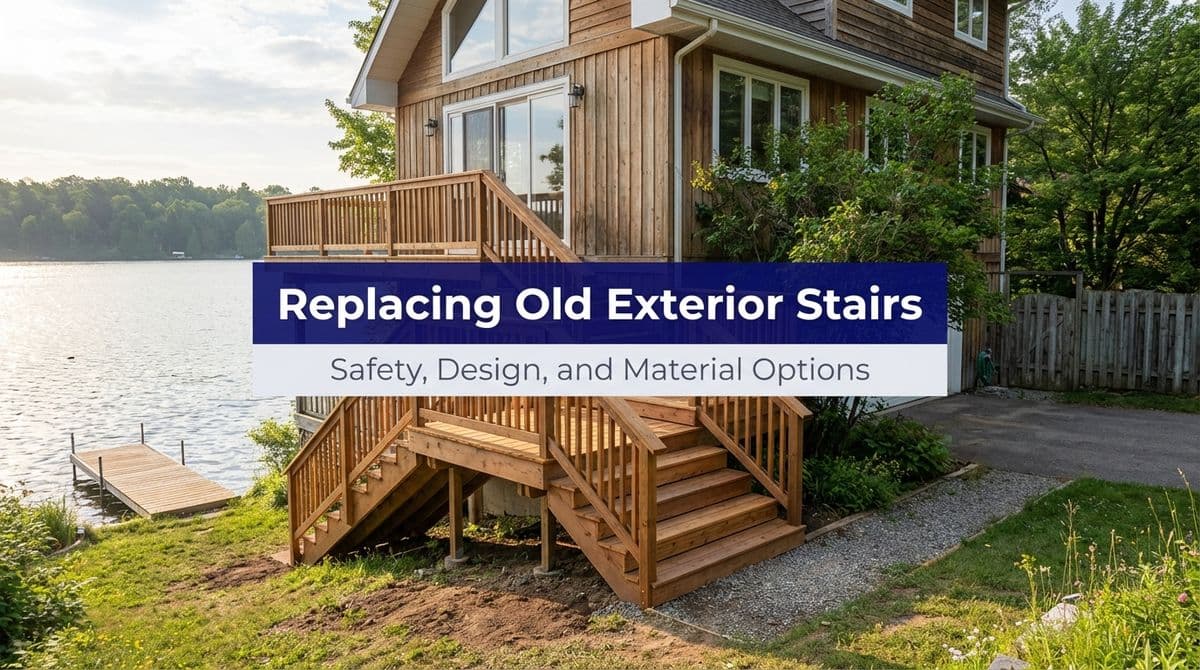
When Old Lakeside Stairs Become a Safety Issue
We recently got a call from a homeowner — let’s call her Lisa — who lives in a seven-unit townhome community on a lake. Most of the units had beautiful paver-style steps leading down toward the water, but Lisa’s unit was the odd one out. She had no direct access, while another part of the property still had an old, deteriorating wooden stairway that had become a real hazard.
Lisa’s HOA wanted two things: a new set of exterior stairs with a railing that would match the existing paver steps, and removal of the old wooden stairs, with that area filled in and restored to grass. On top of that, they were also thinking ahead about a property-line fence to define their boundary with the neighboring property.
Situations like Lisa’s are common for townhomes and lakeside properties built in the 70s and 80s. The original access was rarely designed for decades of use, today’s safety codes, and modern expectations for curb appeal. So we thought it would be helpful to walk through how we look at replacing old exterior stairs and what you should consider if your HOA or lake place is facing a similar project.
Step One: Safety and Code Come First
Whenever we’re called out to look at old exterior stairs, our first priority is safety. In Lisa’s case, the wooden steps they wanted removed were already a concern for trips and falls, especially with snow and ice in the winter. That’s a pretty typical story.
Here are a few red flags that usually tell us it’s time for replacement, not just repair:
- Soft, rotted, or spongy wood treads or stringers
- Loose, wobbly, or missing railings
- Uneven riser heights (each step feels different)
- Cracked, heaving, or settling concrete or pavers
- Steps that are too narrow or too steep by today’s standards
Most townhome communities also need to think about code and liability. For shared access like lakeside stairs, we look at:
- Consistent tread depth and riser height from top to bottom
- Proper railing height and spacing (especially if there’s a drop-off)
- Stable, well-compacted base so the steps don’t shift or settle
- Good drainage so water isn’t pooling and turning to ice
For HOAs, getting the stairs right isn’t just about looks — it’s about making sure residents and guests can use them safely for years to come.
Matching Existing Stairs at Townhomes and HOAs
Lisa’s HOA already had four sets of existing steps from when the property was built in the 1970s. Her new stairway needed to look like it had always been there. That’s a common request at townhomes: “Can you match what we already have?”
When we’re adding a new set of steps to match older ones, we typically look at:
- Materials: Are they concrete, natural stone, or paver steps?
- Color and texture: Are they smooth, tumbled, or patterned?
- Layout: Straight run, L-shaped, or integrated into a slope?
- Details: Caps, sidewalls, and how the railing is attached
On a lakeside property, we also think about how the new stairs will tie into existing retaining walls, walkways, and shoreline access. The goal is for the new set to blend in so well that a visitor couldn’t tell which set was installed this year and which has been there for decades.
Material Options: Pavers, Concrete, or Natural Stone?
In Lisa’s case, she described their existing lakeside steps as “almost like paver steps.” For many 70s-era townhomes, that means a modular block or paver system that can still be replicated today, or at least closely mimicked with modern products.
Here are the main material choices we usually discuss with lakeside and townhome stair projects:
Paver or Block Steps
- Pros: Very customizable, great for matching existing installations, excellent for sloped lakeside lots.
- Cons: Requires a skilled installer and proper base prep to prevent settling or movement.
Cast-in-Place Concrete Steps
- Pros: Strong, long-lasting, and relatively low maintenance; can be broom-finished for traction.
- Cons: More challenging to “match” to existing paver-style steps; cracking can occur if base and drainage aren’t handled correctly.
Natural Stone Steps
- Pros: High-end, timeless look; fits in beautifully with natural lakeside landscapes.
- Cons: Heavier, more expensive, and may look noticeably different from older, manufactured steps.
We’ll often start by asking for photos once the snow is gone, just like Lisa offered, so we can see exactly what’s there before making a recommendation. From there, we can decide whether to match closely or upgrade to something more durable while keeping the same overall style.
Removing Old Wooden Steps and Restoring the Area
The second part of Lisa’s project was removing an old, unsafe wooden staircase and simply returning that area to lawn. That’s a smart move when an access point is no longer needed or isn’t in a safe location.
Our typical process for this kind of removal looks like:
- Carefully dismantling the old stairs and hauling away all debris
- Removing or cutting off old posts and footings below grade
- Bringing in fill dirt to level and blend the slope smoothly
- Compacting the soil so it doesn’t settle into a dip
- Adding topsoil and either seeding or laying sod for a clean, grassy finish
For HOAs around lakes, this also cleans up the look of the shoreline approach and eliminates a tempting but unsafe “shortcut” that people might still try to use.
Railings, Property Lines, and Neighboring Fences
On our call with Lisa, she also asked whether we did any fencing. While we don’t install chain link, we do coordinate with trusted fence installers, especially when a project involves tying into an existing wall or property-line barrier.
If you’re adding stairs along a property line or near a neighbor’s fence, it’s worth thinking about:
- How the new stairs and railings will align with existing walls or fences
- Whether you need a small ornamental fence or rail to define your property
- Keeping styles complementary so everything looks intentional
Often, a simple metal or ornamental fence can extend the visual line of a neighbor’s wall, clearly marking the boundary without feeling closed in.
Planning Your Own Exterior Stair Replacement
If your townhome association or lakeside property is dealing with aging stairs, here’s how we suggest getting started:
- Take clear photos of the existing stairs and the areas you’d like to add or remove stairways once the snow is gone.
- Note what you like about the existing sets (materials, color, width, railing style).
- Check with your HOA about any design standards or requirements for matching.
- Schedule a site visit so we can walk the grade, measure, and talk through options and budget.
Whether you’re adding a new pathway to the lake, retiring an old wooden stairway, or finally getting all the units matching, a well-planned stair project can improve safety, convenience, and curb appeal all at once. And done right, it should look like it’s always been part of the property.