Can You Install a Paver Patio in Late Fall?
Thinking about a paver patio in late fall? Learn how weather, soil conditions, and contractor schedules determine whether you should build now or wait until spring.
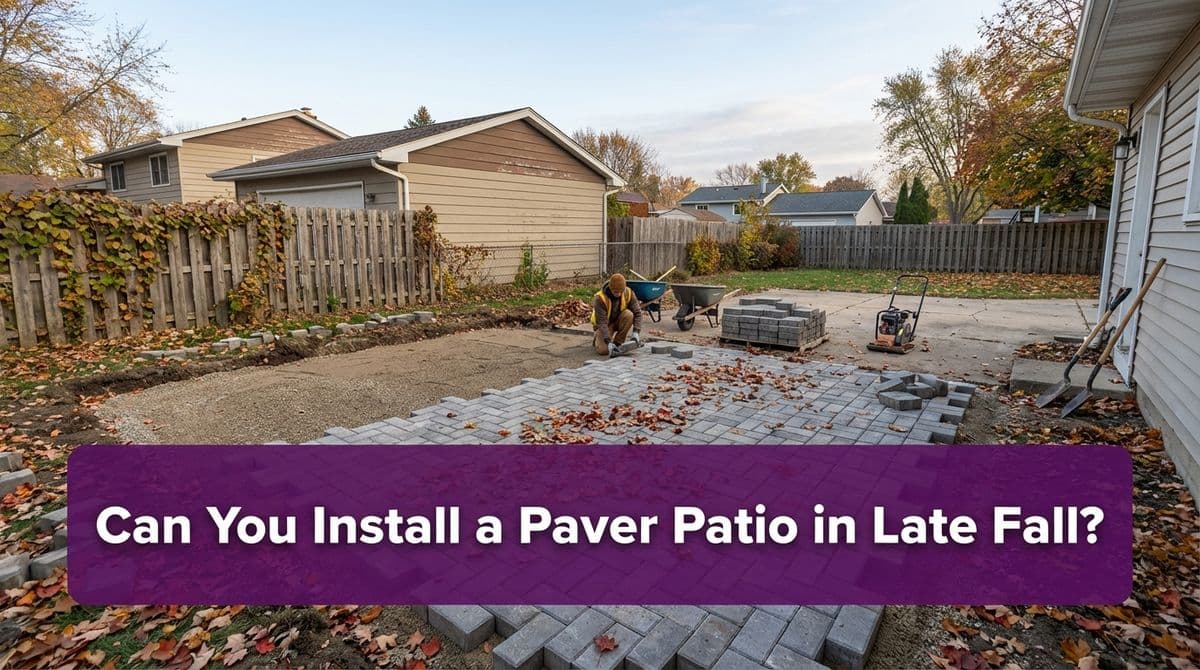
Can You Really Install a Paver Patio in Late Fall?
We recently got a call from a homeowner — let's call him Brian — who had just finished digging out his backyard. He was excited about finally getting a paver patio but had one big question: “Is it even possible to put in a paver patio this late in the year, or is that more of a next-year thing?”
That’s a question we hear a lot once the leaves start falling. The short answer is: yes, you often can install a paver patio in late fall — but it depends on the weather, your soil conditions, and your contractor’s schedule.
In Brian’s case, timing was right on the bubble. We talked through our calendar, the forecast, and how far along he already was with the excavation. Those same factors are exactly what you should be thinking about if you’re trying to squeeze in a patio before winter.
How Weather Affects Late-Fall Paver Patio Installations
The first thing we explained to Brian was that every year is different. Some years we’re installing patios in light jackets; other years we’re shoveling snow by Halloween. Late-fall work is always a bit of a “play it by ear” situation.
Temperature and Freezing Concerns
For a quality paver patio, we’re most concerned with:
- Overnight lows dropping below freezing
- Daytime highs staying cold enough that the ground never really thaws
- Frequent freeze–thaw cycles while we’re building the base
The base material under your pavers needs to be compacted in thin, even layers on soil that isn’t frozen. If the ground or base is freezing and thawing while we work, you’re asking for settling, shifting, and uneven pavers down the road.
As a rule of thumb, we’re comfortable installing as long as:
- Daytime highs are usually above the mid-30s
- The subsoil isn’t frozen solid
- We’re not battling constant rain or snow
Rain, Snow, and Mud
Weather doesn’t just mean temperature — it also means moisture. Too much rain or heavy early snow can turn your project into a mud pit. That makes it hard to:
- Get proper compaction of the base
- Keep your patio area clean and level
- Move materials in and out efficiently
When Brian called, we told him that the upcoming week looked workable, but our ability to commit depended on how those forecasts held up and how our other meetings shook out. That’s exactly how we treat late-fall projects: we watch the weather closely and build in a little flexibility.
Why Soil Conditions Matter Just as Much as the Forecast
Another key part of our conversation with Brian was the condition of his backyard. He told us, just like many DIY-minded homeowners do, that he had already dug out most of the area himself.
That can be a big help, but it also raises some questions we always walk through:
- Is the excavation deep and even enough? We typically need room for base material plus the pavers.
- Is the subsoil stable? Clay soils in particular can be tricky when they’re wet or partially frozen.
- Is there standing water or heavy mud? If so, we may need to let things dry out or adjust the design.
Late-Fall Soil Red Flags
We tend to hit pause and recommend waiting until spring if:
- The ground is already frozen several inches down
- There’s persistent standing water in the excavation
- Heavy equipment or even wheelbarrows are sinking deeply into the yard
On the other hand, if the subsoil is firm, we can access the area safely, and the forecast looks reasonable, late fall can still produce a patio that performs just as well as one installed in May or June.
Access and Equipment: Can We Even Get Back There?
One specific detail Brian brought up was access to the backyard. He said we couldn’t get a full-size skid steer (“bobcat”) back there, but we might be able to squeeze in a smaller machine, or at worst, use wheelbarrows.
We told him about our compact machine that’s 48 inches wide — that’s what we typically use to dig out patios and move base and pavers. Whether or not we can get that kind of equipment into your yard affects:
- How long the project will take
- How many labor hours we’ll need
- How realistic a late-fall timeline is
If we’re relying mostly on wheelbarrows in cold, wet conditions, everything slows down. In October, that might be fine. In late November, those extra days can push us right into freeze-up.
How Contractor Schedules Affect Your Timing
The other big topic Brian and I discussed was our fall schedule. He called right as I was lining up a couple of meetings for other potential projects. I was honest with him: if those jobs moved forward, we’d be getting into “questionable” territory for this year.
That’s the reality of hardscape work in our climate:
- We book out quickly in late summer and early fall
- Weather delays from other jobs can ripple into your start date
- Shorter daylight hours reduce how much we can get done in a day
Holding a Spot on the Schedule
To help Brian, we offered a simple approach we use a lot in late season:
- He sends photos and measurements of the patio area
- We provide a ballpark estimate based on our standard pavers and typical base depth
- If that estimate fits his budget, he can place a small, light down payment to hold a spot on our fall schedule
That way, he’s not fully committed to a design yet, but he doesn’t lose his chance for a current-year install if the weather cooperates and our calendar lines up.
Should You Build Now or Wait Until Spring?
When homeowners ask whether to push for a late-fall install or wait, we walk them through a few key questions:
- How soon do you really want to use the patio? If it’s for next summer’s grilling season, early spring might be just fine.
- How does the current weather pattern look? A milder, drier fall is far better than one with early snow and deep freezes.
- Is your contractor being realistic about timing? If your project would clearly run into deep winter, waiting is usually smarter.
In many cases, we’ll tell homeowners exactly what we told Brian: “Right now, we can probably still get you in this year, but if that changes, we’ll move you to early spring and make you one of the first projects on the schedule.”
Practical Steps If You’re Considering a Late-Fall Patio
If you’re in the same boat as Brian — yard dug out, ideas in your head, and the calendar creeping toward winter — here are some steps you can take:
- Measure your space (length and width, plus any curves or bump-outs)
- Take clear photos from multiple angles, including access paths
- Note any obstacles (fences, AC units, sheds, tight gates)
- Contact your contractor early to discuss timing and get on their radar
- Be flexible about exact dates — weather may shift things by a week or two
Whether you end up building in late fall or become one of our first spring projects, good planning now means a smoother install and a patio that lasts for years.
If you’re not sure which way to go, reach out, send over a few photos and measurements, and we’ll walk you through what makes the most sense for your yard and our climate — no guesswork required.